

Think of PXM as the bridge between your technical systems (ERP, PLM) and the customer-facing world. But keep in mind that PXM isn’t just software. It combines people, processes, and technologies to ensure buyers get accurate product info automatically, in the right context for their needs.
PXM vs. PIM vs. DAM
PIM (product information management) software is the system of record for structured product data, including attributes, specifications, descriptions, and relationships. DAM (digital asset management) software is the system of record for digital assets, such as images, videos, 3D files, certifications, labels, and usage rights.
PXM is the operating model that connects PIM and DAM to the rest of your stack (ERP, PLM, ecommerce, data pools). It applies governance and distributes channel-ready content wherever buyers look.
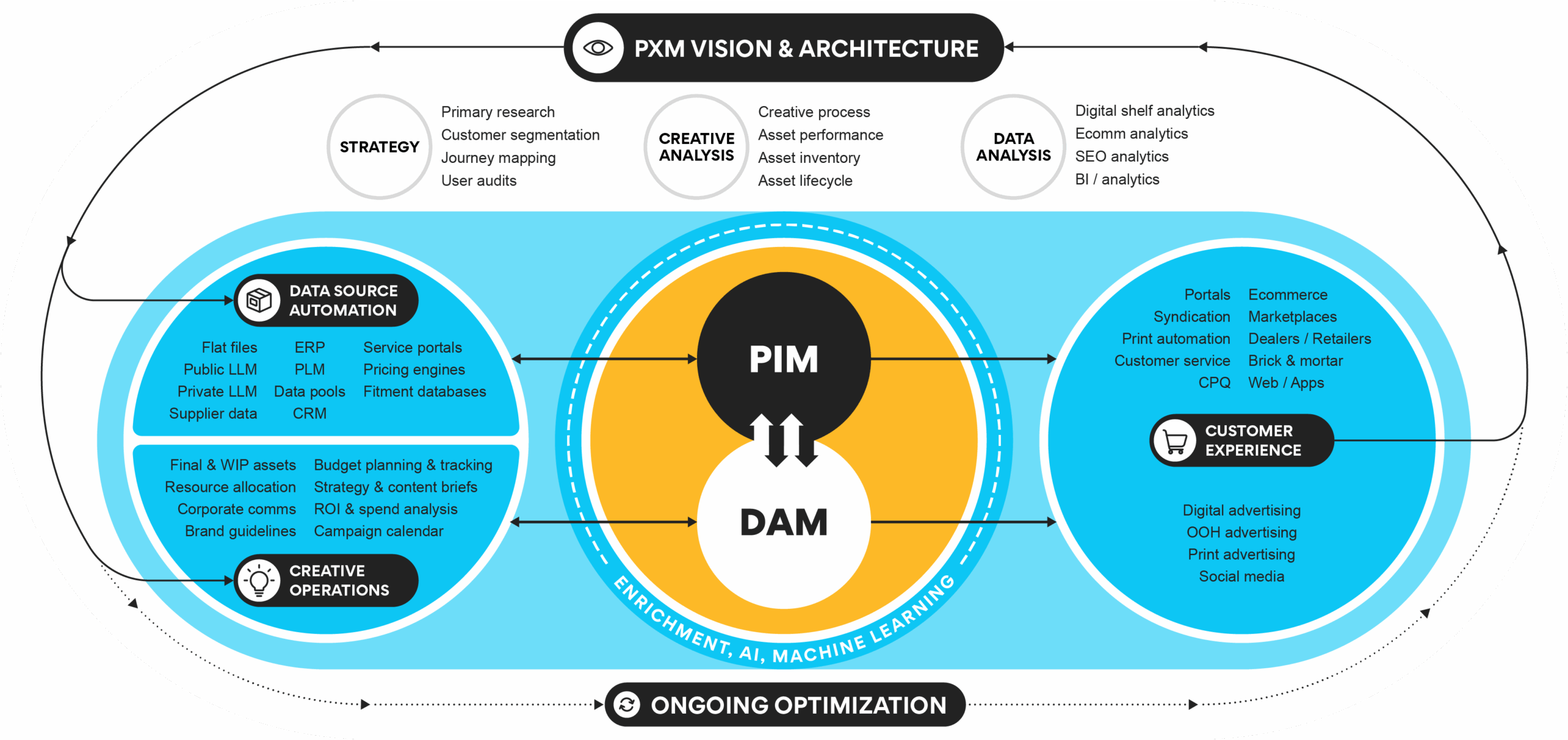
PXM is critical for product companies that want to remain competitive. It is the linchpin of product-related AI initiatives and essential to meeting ambitious growth targets.
Digital leaders who invest in PXM see tangible results. They modernize legacy processes and accelerate digital transformation without overloading IT. They address compliance issues stemming from scattered data and missing audit trails.
PXM is the strategic layer that automates the internal flow of product content and automatically pushes it everywhere it needs to go. It does so by centralizing content, enforcing workflows, and automating market-specific syndication.
How Ntara delivers PXM
At Ntara, we start PXM engagements by learning how your teams work today. Then we co-create a roadmap that identifies and prioritizes PXM initiatives. We jointly define how governance over product content will work. Then, we work quickly to launch an MVP. From there, we iterate in sprints, connecting more systems, automating more content, and expanding analytics.

If your product content still relies on spreadsheets and shared drives, you’re already spending time and money without getting a return. PXM refocuses that investment on governed PIM and DAM, ERP/PLM integrations, automated syndication, and ongoing optimization.
To recap:
- PXM is the operating model for product content that connects your systems to every buyer channel.
- PIM and DAM are the core PXM systems.
- Governance, integrations, and syndication make PXM effective.
- The benefits of PXM include faster launches, fewer IT tickets, stronger compliance, and consistent customer experiences that build trust.
Ready to discuss your PXM strategy? Get in touch with our team.