A DAM that operates in isolation is a storage system
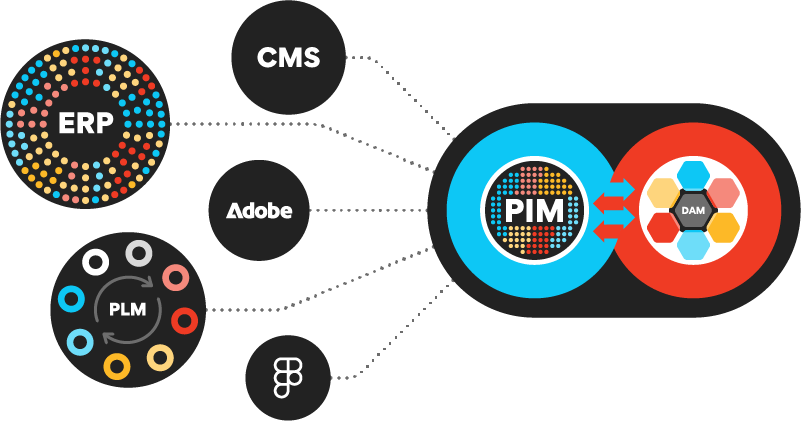
DAM integration connects your digital assets to the systems that activate them, including PIM, CMS, ecommerce platforms, and creative tools. That way, the right asset reaches the right channel without manual intervention.
Ntara has run migrations for organizations with tens of thousands to hundreds of thousands of assets. We’ve done it on aggressive timelines and under licensing deadlines. The approach is the same either way. Plan meticulously, migrate in phases, and validate everything.
Why this matters
When DAM and PIM are disconnected, moving assets and enriching product data require hours of manual effort. Teams download files, reformat them, and upload them again into various downstream systems. That process doesn’t scale, and it introduces errors at every handoff.
Integration changes that math. When DAM connects bidirectionally to PIM, metadata flows both ways. Product attributes automatically enrich asset records, and asset status automatically syncs back to product pages. When DAM connects to ecommerce, the approved image is always the live image, and no one has to manually push it.
What DAM integration means at Ntara
We design and implement DAM integrations across the systems that make up your product content stack:
- PIM ↔ DAM bidirectional integration
- DAM to CMS and ecommerce channel syndication
- Creative tool integrations (Adobe Creative Cloud, Figma)
- ERP and PLM data flows into DAM for asset context
- CDN and URL configuration for asset delivery
- Metadata closed-loop automation between connected systems
We also build custom integrations and connectors where platform-native options fall short. Our Bynder DAM to Inriver PIM connector is one example that’s purpose-built. It handles the metadata sync and closed-loop automation that out-of-the-box options don’t cover.
Ntara’s approach to DAM integration
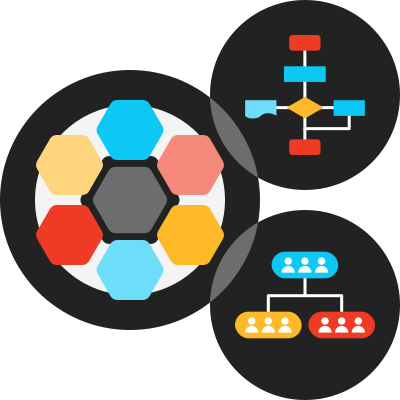
We start by mapping the current state. What systems exist? What data moves between them manually today? Where are the breaks? From there, we design the integration architecture and build it in phases. We start with the highest-value connection and extend from there.
Whenever possible, we follow a bidirectional integration model. That means data doesn’t just flow out of DAM. It also flows back in, enriching asset records automatically and reducing the metadata burden on creative and marketing teams.

Results we’ve seen
Columbus McKinnon had both DAM and PIM, but they lived in silos. Moving assets and syncing product data took hours of manual work and stalled ecommerce updates. We set up a closed-loop integration. Today, actions in DAM trigger PIM to receive, validate, and ingest metadata. And related metadata automatically flows back into the DAM, making assets more searchable without manual enrichment.
When Bouclair migrated from their existing DAM to Bynder, they couldn’t risk breaking the flow of images to their ecommerce site. Ntara established one-way integration from DAM to PIM in two weeks, with the bidirectional flow finalized as the project continued. Throughout this process, syndication to ecommerce never stopped.
Visual Comfort had invested in DAM with minimal adoption. During a separate PIM engagement, we discovered this gap and built a bidirectional PIM-DAM integration. Product information from PIM now feeds into the DAM automatically. Asset metadata syncs back to PIM. New metadata fields such as color, style, and finish now flow from PIM to DAM, enabling marketers to search by product attribute. A previously dormant DAM system is now an active part of their content workflow.
Why Ntara for DAM integration
We’ve built integrations across the major DAM, PIM, CMS, and ecommerce platforms, so we understand the nuances that off-the-shelf connectors don’t account for. Our team includes both DAM and PIM practitioners, so we design integrations with the full product content ecosystem in mind.
When you work with Ntara, integration isn’t a deliverable. It’s the foundation we build toward the operating model you need.
Ready to connect your DAM to the rest of your stack?
Tell us what’s connected today and what isn’t. We’ll map the gaps and scope the integration.