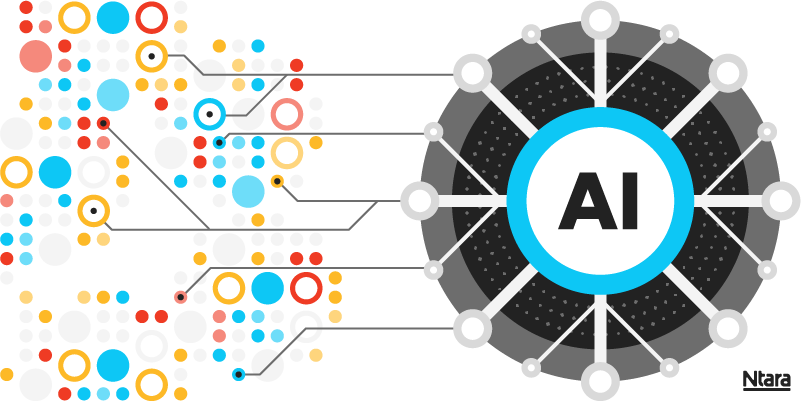
AI engines are already deciding which products get recommended
Today’s product searches don’t always start on Google. In fact, more than 60% of product searches end without ever landing on a web page.
When an AI agent recommends a product, that recommendation comes from structured data feeds. On the backend, you’re either feeding it your product data or failing to. The deciding factor is usually within your product content management. If product data is incomplete, inaccurate, or missing from the surfaces AI consumes, your products won’t appear.
Most companies don’t know where they stand. They invest in AI/AEO strategies, but they work with “SEO companies” that don’t fully understand how to fix the product data foundation that dictates whether those strategies can work.

4,700%
YOY growth this year in AI referral traffic to US retail sites

31%
Better conversion rate on average from AI-referred traffic vs. non-AI
Agentic commerce and machine product data needs
Agents and LLMs benefit from an entirely different set of data, presentation, and schema than human users. Our agentic commerce readiness assessment exposes how well your organization scores against the “traditional” and SEO-focused content such as product descriptions, completeness, and accuracy.
It also assesses your business on agentic commerce factors such as semantic richness, micro-attributes, and the relational context needed to show up in AI-assisted buying experiences. At the end of this engagement, you’ll know how your business fares against its top competitors.

How buyers search now: B2C and B2B
B2C • CONSUMERS
“Tell me what to buy.”
Conversational vs transactional
B2B • PROFESSIONAL BUYERS
“Spec, source, decide.”
Embedded in workflow, not search
A diagnostic for how AI evaluates product data
Ntara’s agentic commerce readiness assessment is a fixed-scope engagement that scores product data and information infrastructure against the needs of AI engines. It produces a composite score, a written findings report, and a prioritized roadmap.
15-dimension scorecard
Your product data and information infrastructure are scored across 15 dimensions organized into four categories: data foundation, AI surface presence, asset readiness, and competitive position. Each dimension is scored 0 to 100 and weighted by revenue exposure.
Live LLM query protocol
We run controlled queries against AI platforms such as ChatGPT, Gemini, Claude, Perplexity, and Google AI Mode. We evaluate what those engines say about your products, how accurate the output is, and where your data is missing or misrepresented.
Competitive benchmark
We score up to three competitors on the same rubric to create a contextual gap analysis. You see where you lead, where you trail, and which gaps represent the highest risk to your AI-mediated revenue.
Findings and roadmap
The engagement closes with a composite score (0 to 100), a written findings report, and a prioritized roadmap with fixes ranked by revenue exposure. This package is designed to be shared with leadership and finance, and is often used by our clients to create the business case for PIM, DAM, and ecommerce optimization work.
Four concrete deliverables
Agentic commerce readiness score
You’ll get a dimension-by-dimension score (0-100) benchmarked against your named industry peers. We’ll also provide a composite rating on an AI readiness maturity model: foundational, developing, advanced, or leading.
Findings and gaps report
We’ll provide a narrative report that documents key findings, risk areas, and opportunities across the same four dimensions: foundational, developing, advanced, or leading.
Prioritized roadmap
You’ll get a four- to six-month action plan with sequenced initiatives, effort and impact mapping, and recommended quick wins versus strategic investments.
Executive presentation
We’ll make you a C-suite-ready summary deck that can be used for anything from internal socialization to investment decisions.

What this looks like in practice
The agentic commerce readiness assessment is designed for manufacturers, distributors, retailers, and CPG brands with $100M or more in revenue. This is a good fit if:
- You’re noticing AI search traffic changes and don’t know how to respond
- Leadership is asking about AI commerce strategy and you need data to brief them
- Competitive pressure is increasing and you want to identify the gaps before they widen
- You’re evaluating a platform migration and want a baseline before committing
What comes after the assessment
The agentic commerce readiness assessment is the starting point, not the finish line. Findings connect naturally into Ntara’s broader AI and PXM services, including Google Merchant Center onboarding, PXM strategy and consulting, PIM or DAM implementation, and organizational enablement.
Ready to find out where you stand?
Schedule a scoping call. Discovery calls are no-pressure and typically 30 minutes.