

Introduction: Market Momentum & Buyer Expectations
In 2024, B2B ecommerce sales in the U.S. reached $2.3 trillion, accounting for nearly 25% of all B2B product sales. And that is is expected rise to $3 trillion by 2028. This reflects a dramatic shift toward digital channels—turning corporate sites into critical extensions of both customer service and revenue generation.
Modern buyer expectations are shaped by B2C retail experiences. Your customers expect highly functional, intuitive online purchasing. That means that your platform should deliver rich product content, seamless navigation, and smooth end-to-end purchasing, including fulfillment and support.
But B2B demands more than B2C-style UX. It also requires a tailored strategy to match enterprise purchasing complexity and buyer needs.
Connect your ecommerce site to the core of your business
Begin by documenting what systems you have in play right off the bat. Your ecommerce site must connect deeply with internal systems and support the business and processes in play.

ERP
- If there is a MacGyver of systems, it’s the ERP. It is often responsible for customer management, SKU and product, inventory, orders, warehousing, fulfillment, invoicing, and more.
- Orders from ecommerce sites flow to the ERP and updates to the order in the ERP flow back to ecommerce, including status, fulfillment, invoicing, and even payment.
- Data from orders placed across various channels can flow from the ERP and get stored on the ecommerce system, giving customers have full visibility to their purchase history.

PIM
- PIM systems feed rich product content—properly tagged data, images or image URLs, videos, pdfs, and more—to the ecommerce site.

CRM
- Enables personalized marketing and customer insights

Payment & tax engines
- Handle invoicing, taxes, and global compliance with robust security.
Understanding where your ecommerce site will live within the larger ecosystem is essential. These integrations could require APIs, webhooks, or middleware to ensure current pricing, availability, and order statuses are displayed in real time.
Secure access that fits your business model
Everything today requires authentication, protection, and privacy. Ecommerce is no exception.
There are many ways to manage and control user access in modern systems and you need to make the right decisions for your organization and business model. Here are a few questions to help make user management decisions clearer.
- How will users request access? Is it self-service or is there a managed application process?
- Will you offer a guest checkout providing some level of consumer purchasing?
- Do you have a current credential management system or single sign-on management tool for your customers and users?
- Does your shared access management system provide authenticated access to other required systems?

When it comes to login management and access control, there are typically a few common options such as:
- Local login provided by the ecommerce platform
- Single sign-on (SSO)
- Multi-tenant/delegated login
- Social/enterprise identity providers
There are tradeoffs with each of these methods and thinking through how logins will be managed—not just for user authentication but for functionality—is critical for your B2B ecommerce success.
Designing for complex B2B workflows
Next up, it’s time to think more about how your users need to operate. In B2B, there are several special needs. Some customers may require simple B2C type experience with a single user, while others have a much different complex system with approval processes and visibility restrictions.
For example, a public version of your site might allow browsing a product catalog, but hide pricing, product specifications, part number cross-references, or any number of other sensitive data points. When logged in, customers can be shown customized pricing structures based on their company, region, or other tiers. An end user can also be tied to a role within their company, which can enable workflows and approvals for large purchases.

To understand these user workflows, interview a variety of users and evaluate the different types of roles that will be required. This is best done using series of questions and determining what specific options need to be designed into the ecommerce solution. Example questions could include:
- Is there a single buyer or multiple approvers?
- Do transactions need to go through internal approvals or tiers?
- Will some users have viewing rights, while others initiate orders?
- Will your customers self-administer their accounts, adding and removing users, manage approval tiers, etc.?
- Do you need to hide specific information such as invoicing, order history from certain groups while allowing it for others?
This foundational knowledge ensures your ecommerce flow supports real-world business practices. It provides the basis for a bottom up design process to ensure feature development takes into context access and visibility management when and where needed.
Design vs. functionality
You don’t need only functionality. You also need a modern and intuitive user experience. But depending on the type of purchasing decision, design or functionality could take center stage. For example:
- High-involvement purchases like heavy machinery require immersive visuals, specs comparison with similar products, and storytelling.
- Low-involvement, repeat buys, like screws and fasteners prioritize rapid search, minimal friction, reorder functionality, and quick checkout.
However, if someone needs 30 screws for a driveline component, they may care more about how quickly it is to find that specific product, get it into the cart, and check out. The role of design becomes more functional—getting them to the right product efficiently, with fast page load times.
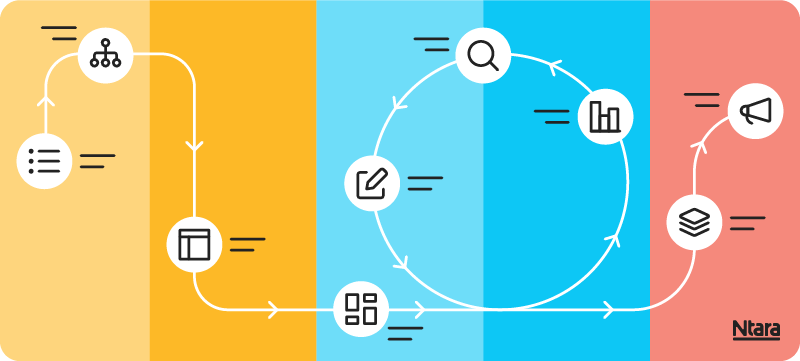
Conduct research and data-driven testing to understand which levers best serve each user need. This will help inform both the design and functionality as well as workflows and roles.
Product data is the foundation of trust
A successful B2B site is only as good as the information behind it. Your product data must be accurate, specific, and consistent—not only on your ecommerce site, but across the entire product ecosystem. That includes distributors, marketplaces, catalogs, print, advertisements, etc.
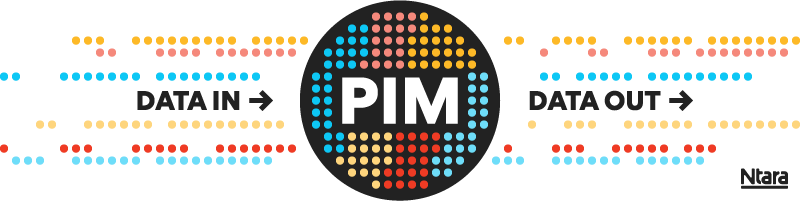
If your data needs cleanup or enrichment, use this as an opportunity to bolster content systems like PIM or DAM, while planning for ongoing maintenance and accuracy.
Accurate product data builds trust. It reduces returns, support tickets, and customer confusion—while errors destroy confidence and cost you sales.
Performance integrations and B2B data flow
When a customer places an order from the site, what happens next? Integration should flow in both directions with ERP, WMS, PXM, and CRM feeding the ecommerce site. Also, the ecommerce site should feed appropriate data to various systems, like ERP and third-party payment processors. When a customer goes to look for their order and payment history, the information should be updated based on the most recent activity in other systems.
This bi-directional communication stream goes beyond ecommerce alone. B2B customers often place orders utilizing many different technologies, including EDI (ANSI X12 and EDIFACT), phone orders, punchout catalogs, EDI thru VANs, APIs, direct integration, sales rep assisted orders, and more. The list goes on and on.
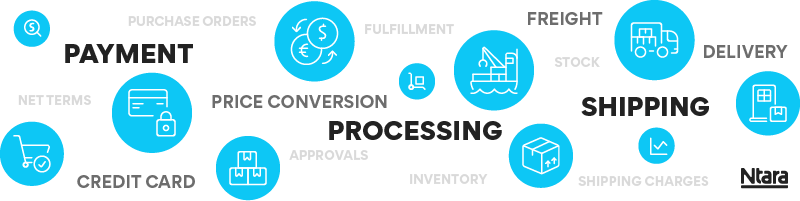
Customers using multiple order methods want and need a portal where they can view and track the status of all these orders. The ecommerce portal can and often will serve this need. Ensuring all orders are accurate, up-to-date, and easily accessible requires performance-based integration systems with high reliability.
Additionally, ecommerce sites must understand B2B-specific purchasing requirements. B2B companies often deal internationally, requiring tax calculation and international pricing conversions. Handling these and similar complexities is the cost of entry for a B2B ecommerce site.
UX optimization & search
In addition to balancing both design and functionality, ensure your site is intuitive and performance-oriented. This requires testing user behavior and ensuring the backend of the site can support search terms that the customers actually use.

To get ahead of this:
- Use session recordings and heatmaps to diagnose bottlenecks and navigation issues.
- Account for a search experience based on SKUs, part numbers, product names, and categorizations—then refine and iterate based on user behaviors.
Using user research to inform site decisions will help you optimize your site for conversions and reduce bounce rate.
AI-powered assistance
AI can enhance and personalize your ecommerce experience, making it smarter, faster, and more useful for customers in many ways.
- Personalize content and views by customer industry, user role, or geographic context.
- Anticipate needs using purchase history to suggest reorders and complementary products.
- Deliver real-time updates based on recent activity and interactions.
- Guide product discovery by helping customers quickly find the right solution for their needs.
- Provide instant answers and assisted research to reduce friction in the buying process.
With AI, your site can offer relevant products, tailored pricing, and region-specific experiences that empower customers and strengthen loyalty.
For B2B buyers, AI-powered assistance means less searching, more ordering.
Self-service portals
A best in class ecommerce site often includes a self-service portal, which enables a customer to do alone what would previously require a call with a sales rep or customer service.
The portal can enable autonomy for tasks like:
- Reordering products instantly from past orders
- Accessing account-specific pricing anytime
- Tracking order status and view shipping details
- Managing billing & account info
- Creating, updating, and removing company users
- Handling multi-user workflows and purchase approvals
Self-service enhances the user experience while also reducing demand on your support and sales teams.
Execution strategy & conclusion
Successful ecommerce initiatives need broad organizational support. Consider a phased MVP approach to pilot with core customers—then refine and iterate.
Building a B2B eeommerce site blends strategic planning, technology, and customer centricity. Even the best plans need to be flexible. An agile approach with a trusted solution provider can help keep maintain progress while allowing for flexibility when needed.
A modern ecommerce site should use tools from user based customization, seamless integration with other platforms, and AI to produce a fast, reliable, and personalized customer experience—fueling growth for your B2B business.